
Strengthening Advocacy in Juvenile Mental Health Court: A Collaborative CLE offering insight, clarity, and practical tools for supporting youth in JMHC
What does it really take to advocate for a young person in Juvenile Mental Health Court? On March 6, we brought the full JMHC team together to explore that question with our Crossroads attorneys — from the specialist who guides the court’s structure to the therapists, school partners, and public defenders who shape each child’s path. The training offered a clear look at how this unique court operates and what helps young people change the trajectory of their lives.
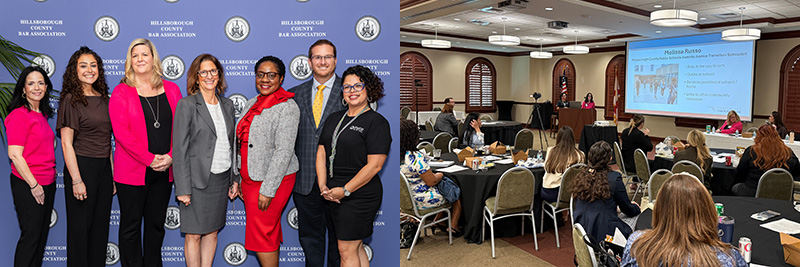
The first hour highlighted the professionals whose clinical, educational, and court‑support roles inform how youth are served in JMHC. Christine Mukherjee, JMHC Specialist, opened with a clear overview of the court’s structure, expectations, and treatment‑focused approach. Dr. Sindy Ramos and Jamie Kaufman from the Youth Experiencing Success (YES) Program — a program of Success 4 Kids & Families within the Crisis Center of Tampa Bay — followed with insight into the therapeutic supports available to youth, including crisis response, ongoing treatment, and the steady engagement that helps stabilize young people navigating trauma. Melissa Russo, Hillsborough County Public Schools Juvenile Justice Transition Specialist, explained how school attendance, special‑education services, and consistent communication can shape a youth’s progress in meaningful ways.
The second hour shifted to the legal perspective, with Assistant Public Defenders Marie Marino and Khalila Frett opening with grounded best practices for advocating effectively in a treatment‑oriented court. They also noted that Hillsborough County’s Juvenile Mental Health Court was the first in Florida, a distinction that continues to shape its collaborative, treatment‑focused approach. From there, they walked through how APDs and Crossroads AALs work together, clarifying roles, communication expectations, and the shared strategies that keep youth supported both in and out of the courtroom.
Impact in Action: How Crossroads AALs Change Lives in JMHC
The APDs then brought these principles to life through real case examples — moments where Crossroads AALs stepped in with persistence, creativity, and compassion to change the direction of a young person’s life:
-
A trafficking survivor with no safe housing after turning 18.
The AAL visited him in jail, connected him with Selah Freedom, coordinated with the APD, and helped secure a placement that resolved both his JMHC and adult cases. -
A youth who repeatedly ran away and was later detained in Pasco County.
The AAL immediately connected with the Pasco PD, showed up for detention hearings, and visited the youth in custody — ultimately helping the youth agree to a safe new placement. The AAL also discovered that the youth had entered a plea in Pasco despite being incompetent to proceed in Hillsborough, alerted both APDs, and the improper plea was set aside along with a pending pickup order. -
A 17‑year‑old kicked out on his 18th birthday with no phone, no home, and no support.
The AAL tracked down every possible contact, located the youth through a former Juvenile Probation Officer, connected him with Independent Living Services, and advocated for essentials like food assistance, transportation, and medical care. -
A youth with severe mental illness locked out of his home and out of school for a year.
The AAL filed a shelter petition and a formal dependency petition, securing DCF services, emergency housing, and mental‑health care. Dependency Court ordered the parent to resume care, and the youth returned home with school enrollment and treatment in place.
These stories illustrated, in real terms, how Crossroads volunteers expand what’s possible for youth in JMHC — not by replacing anyone else’s role, but by filling the gaps that only a dedicated AAL can see and respond to.
We’re grateful to every presenter who shared their expertise and to every volunteer who continues to show up for youth in JMHC with compassion and clarity. This training is now available on our website for anyone who wants to revisit the material, deepen their understanding, or sharpen their advocacy skills. It’s a resource designed to support you — and the young people we serve — every step of the way.
