
Judicial Spotlight: The Honorable Kim Brennan
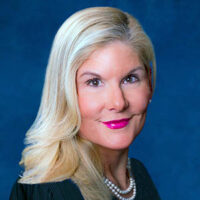
Q. Working on juvenile delinquency and mental health cases can be emotionally heavy—what keeps you motivated or gives you hope when working with young people facing difficult circumstances?
A combination of having seen these kids be successfully rehabilitated and the joy of their parents and other family members when it happens provides the motivation for both myself and the attorneys on both sides who are assigned to this division. Recently, I was in the drive through lane at Starbucks on Dale Mabry when the barista taking my card stated, “Judge Brennan, I want to thank you for saving my brother.” My jaw dropped. The young barista went on to say that I sent his brother to a commitment program and it turned his brother’s life around. He said his brother moved to California and got a job and was doing so well with no new offenses.
The motivation and hope also stems from the legal framework of the juvenile justice system in Florida, which is structured on the belief that children can and should be rehabilitated. This allows the court and the attorneys on both sides, with the input from Department of Juvenile Justice, to fashion more creative solutions designed to help each child through the case in a manner that will cause him or her not to reoffend.
Finally, my optimistic perspective flows from the great strides our amazing third-party services providers such as Safe and Sound, the Reporting Center, and Crossroads For Florida Kids, have made in helping to rehabilitate the children of this county. These entities have changed the trajectory of many of our juveniles. When you save one child, you have saved that child’s future family for generations to come. It is truly an honor and a privilege to be part of the juvenile justice system in this county.
Q. What qualities do you think young people need most from adults in positions of authority?
Today’s world is difficult for kids. They see all of these superficial things on social media being promoted as the accoutrements of success and they are constantly comparing themselves to standards that are not real because of the existence of social media and artificial intelligence. They are repeatedly being told directly and indirectly that what you look like and how much money you make are the only measures of worth, and will make you happy. Sadly, neither of these things, standing alone, or even together, will guarantee happiness. Just look at Hollywood. There are any number of rich and beautiful people who are miserable.
In order for kids to overcome the social media noise and constant comparison of themselves to others, they need mentors in positions of leadership who will show them that purpose and happiness lies in having a life goal that involves doing something beyond themselves, and who also teach them the analytical thinking and leadership skills that will allow them to bypass the noise and focus on their life’s goal, whatever that is.
Q. What do you wish more people understood about the juveniles and families who come through your courtroom and the court system?
Kids of all races, genders, colors, religions, and socioeconomic backgrounds come in front of the court. Many of the kids and/or their parents do not speak English well enough to participate without an interpreter. Many have lost one or both parents. Many are living with a relative because their parents are not able to raise them for any number of reasons. Many more are in the dependency system, having been removed temporarily or permanently from their parents based upon sone level of abandonment or abuse. Many of these dependent children have no permanent home or placement, and are bouncing from place to place every night and even during the day. Many of these kids are not going to school. Sometimes they steal food to eat because they are hungry. Many of them have mental health issues that may cause them to be deemed not sufficiently competent to be tried. Every case is different and every parenting circumstance is different. Consequently, every rehabilitation plan needs to be tailored to the needs and circumstances of the child. Life is necessarily harder for many of these kids as they do not always have the guidance and mentorship of a traditional intact family.
It is also helpful for the general public and the victims of child crimes to understand that the state has rightfully determined that there is a difference between children and adults and has legislated that the appropriate goal for child crimes is rehabilitation and not punishment. This knowledge might help to partially mitigate the frustrations that arise for those who are victims of juvenile crimes when the sanctions are not as severe as what the victim expected or desired.
Q. What advice would you give to adults trying to better support struggling teens?
In a word, empathy. If we are going to be able to help them, we need to understand them and how they think, and the challenges that they think they have. We cannot discount their feelings. It will be important for the child to believe that we are listening and that we truly care and really want to hear and understand what they are saying, so that we can try to help.
Q. After all of the challenges you see in your courtroom, what still makes you optimistic about the future of young people today?
Based upon my observations, young people seem to be more accepting and less judgmental than in prior generations. They are also less resistant to change and tend to be optimists. I have seen much creativity and ingenuity in many of the kids. They will be in a position to solve the problems created by prior generations.
Q. What was your favorite part of growing up in Tampa?
I would say growing up on Davis Islands. My dad was born and raised in Ybor City, but I grew up in my grandparents’ house that my father inherited on the island. At that time and to this day, the island was its own little community. We rode our bikes everywhere and never locked the doors. We went to the Davis Islands drugstore counter for these delicious butter laden honey buns and milk shakes in the summers and on the weekends. I spent many hours at Bayshore Little League watching my brothers play baseball with baseball greats like Wade Boggs. When Gasparilla would roll around each year, it was a holiday for the entire city and was often on a weekday. There were no fences or barricades. We were able to walk over the bridge to the parade with our friends and get prime seating for free. In addition to perfect kid proximity to the festivities, the Florida State Fair started on the same day as the Gasparilla parade at the end of the parade route where much of University of Tampa is now located. We could go to the parade and then the State Fair on the same day. It was fantastic. I also have many fond memories of being on the campaign trial with my dad, who was very involved in politics when I was growing up. He campaigned for many of his friends and others on a regular basis and had us tag along to participate and observe the grassroots process. He taught my brothers and I the importance of our right to vote and how critical the exercise of that right is to protect the many freedoms we enjoy in this country. It was a wonderful learning and bonding experience and good preparation for my own election years later. In the process, my dad took us all over. We spent time in Ybor, West Tampa, the Dog Track, the Horse Track, the orange grove. Then and now, this city has always been a diverse, melting pot of ethnicities where we all get along and everyone is welcome.
Q. Do you have a favorite book, quote or saying that guides you.
Just yesterday, I came upon a great response to an interview question by Tim Tebow while in the doctor’s office. It was from an article titled Tim Tebow’s Life Beyond Football. The quote summarizes my concern for kids in today’s world, it states:
Q: YOU TALK A LOT ABOUT COMPARISON CULTURE. WHY DO YOU BELIEVE COMPARISON HAS BECOME SUCH A TRAP TODAY?
A: Because we’re comparing our real, everyday lives to someone else’s highlight reel. Social media shows people’s “best day,” often filtered and staged, and then we measure our reality against that. There’s a reason filters are so popular – it’s not real. We end up scrolling through images that don’t tell the full story, and without realizing it, comparison starts to steal our joy and our gratitude.
I believe the negative effects of comparison culture are significantly magnified for children who are not as well equipped as adults to recognize and manage the damaging impact of comparison culture. I also think this culture plays a role in the recent rise of certain types of crimes.
Q. Settle the debate—who has the best Cuban sandwich in Tampa?
The Columbia has the best Cuban. My answer is wholly biased for two reasons. First, I dislike tomatoes and mayonnaise immensely and the Columbia makes the sandwich the traditional way with the right bread (La Segunda) and the right filler ingredients, in the right ratios, with no mayonnaise or tomato. Second, it is said by my very smart and well-informed cousin, Richard Gonzmart, that our mutual great grandfather, Casimiro Hernandez Sr., founder of the Columbia Restaurant, invented the Cuban Sandwich.
I will concede that there may be other fabulous restaurants that make the best “Modified Cuban Sandwich!”
